
Car Seat Program

Ohio Buckles Buckeyes (OBB) Program

Geauga Public Health will no longer be offering the Child Safety Seat Program starting April 1, 2025.
If you know of someone who needs a child safety seat, please have them call 216-844-2277 or visit https://www.uhhospitals.org/rainbow/services/injury-prevention-center/child-passenger-safety/car-seat-installation-and-education
Ohio Car Seat Law 4511.81

  • Parents and caregivers are required by Ohio law to obey the following safety practices:
    • Infants and young children must ride in a child safety seat until they are 4 years old AND weigh at least 40 pounds.
    • Every child ages 4-8 who is no longer in a car seat must use a booster seat until she reaches 4’9” tall.
    • Children and teens ages 8-15 who are not in booster seats must use adult seat belts.

Is your car seat registered?

Car Seat Recalls and Registration

Occasionally, a manufacturer recalls a car seat because of a defect that could harm your child. When you purchase a new car seat, be sure to mail the manufacturer’s owner information card provided with the seat. By registering your car seat, you are giving the manufacturer information on how to contact you in the event your car seat is recalled or if they have safety notices.

Can’t find your registration card? You can just as easily complete a quick registration on the manufacturer’s website. Visit the link HERE to register your seat online.

Curious if your seat has a safety recall? Visit NHTSA’s website HERE to check your child restraint for any recalls.

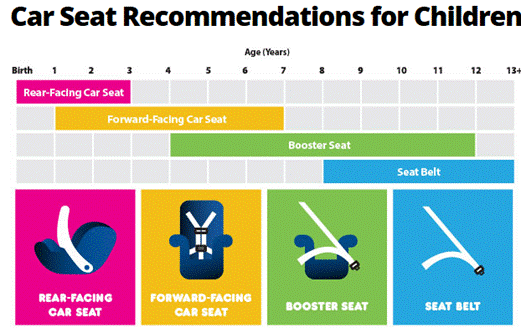
Car Seat Recommendations

  • Select a car seat based on your child’s age, height, and weight.
  • Keep your child in the proper car seat as long as the child fits within the manufacturer’s height and weight requirements.
  • All children under 13 should ride in the back seat.
  • Follow the car seat manufacturer’s instructions and your vehicle owner’s manual on how to install.

Rather than hastily transitioning children between the stages—rear-facing, forward-facing, booster and seat-belt—parents and caregivers are advised to maximize the longevity of each seat type. Using the weight and height limitations of the car seat is a safer and more accurate measure to figure out when it’s time to progress to the next stage.

Why rear-facing?

Use a rear-facing seat until age 2 or more

In a collision, a rear-facing child is cradled by the shell of their car seat, protecting their head, neck, and spine. When forward facing, the shoulders, neck, and head are thrown forward due to tremendous crash forces that can cause severe injury and even death. It doesn’t take much force to cause devastating injury to a developing body, and rear-facing allows the car seat to absorb more force away from the child.

Keep your child rear-facing as long as possible. It’s the best way to keep him or her safe. Your child should remain in a rear-facing car seat until he or she reaches the top height or weight limit allowed by your car seat’s manufacturer.